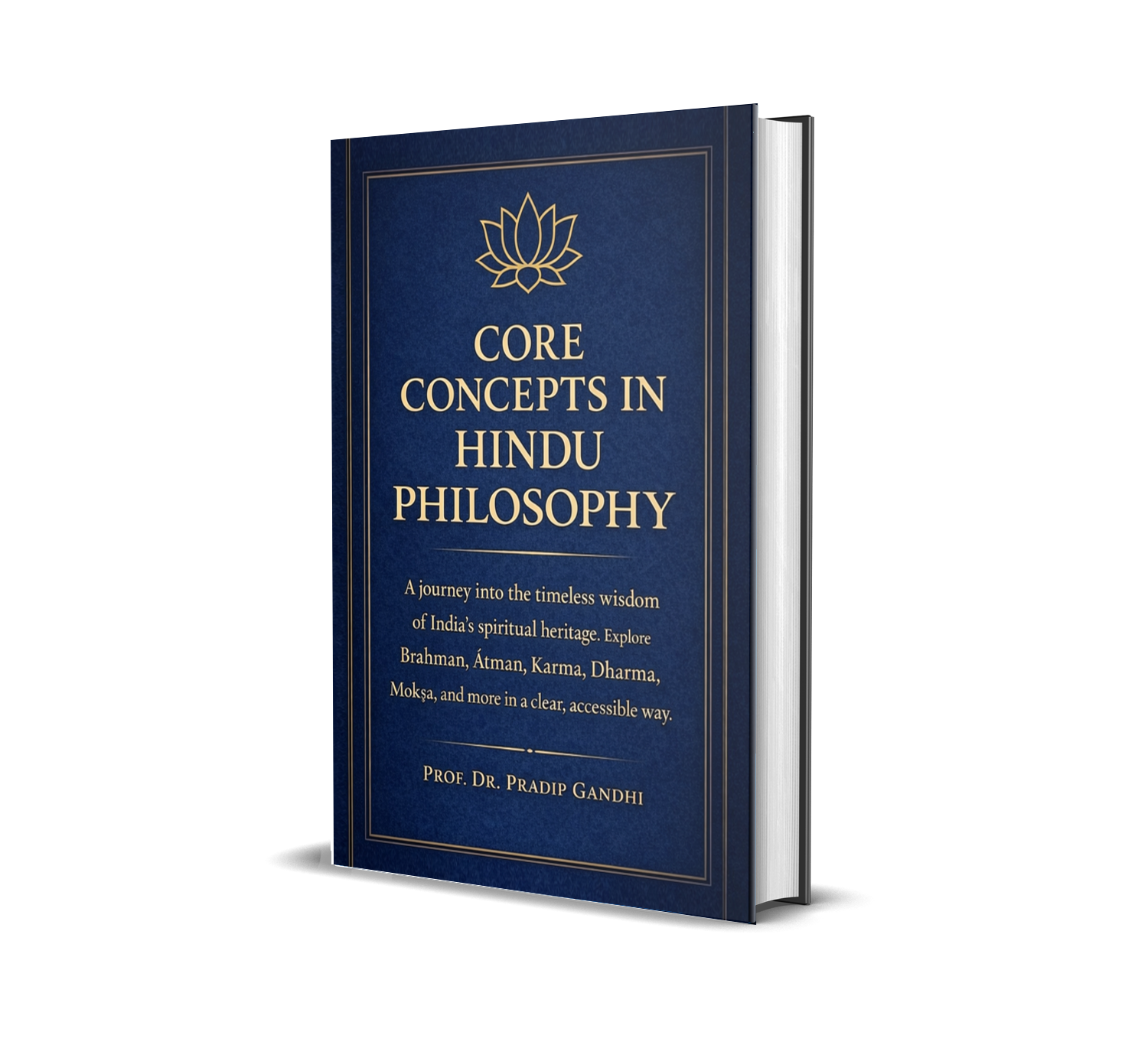
Core Concepts in Hindu Philosophy
Prof Dr Pradip Gandhi is a scholar and author with deep expertise in Hindu philosophy. In Core Concepts in Hindu Philosophy, he distills centuries of philosophical wisdom into accessible, essential concepts. This book is an invaluable resource for students, seekers, and anyone wanting to understand the foundational ideas that shape Hindu thought.
A Systematic Journey Through Hindu Thought
Core Concepts in Hindu Philosophy is an introductory survey that moves systematically through the foundational layers of Hindu thought. The book treats philosophy not as abstract speculation, but as a living tradition where knowledge, ethics, and spiritual discipline converge toward self-realization and liberation.
Each section builds on previous concepts, creating a coherent pathway for readers—whether newcomers or scholars deepening their understanding. Clear chapters, comparative tables, a comprehensive glossary, and bibliographies make the material accessible without sacrificing doctrinal accuracy.
A standout feature is the chapter on Shuddhadvaita Vedanta, written from within the Pushtimarg tradition with remarkable clarity and warmth—bringing lived philosophical practice into sharp focus.
Where to Buy
Available in both print and digital formats from your preferred retailer.
Paperback
Order a physical copy delivered to your door
Ebook
Read instantly on any device, anywhere
The Book's Architecture
A systematic journey through the foundations, systems, and practice of Hindu philosophy.
Vedic & Upanishadic Foundations
The source texts and philosophical origins that underpin all subsequent Hindu thought. Understanding the Vedas, Upanishads, and the primordial worldview.
Explore →Metaphysical Concepts
Core philosophical ideas about being, consciousness, and reality. Exploring Brahman, Atman, Maya, and the nature of existence itself.
Explore →Cosmological & Ethical Concepts
Understanding the structure of the universe, cosmic cycles, dharma, karma, and the ethical dimensions of human existence.
Explore →The Six Classical Darshanas
Samkhya, Yoga, Mimamsa, Vedanta, Nyaya, and Vaisheshika — the orthodox schools of Hindu philosophy and their distinct worldviews.
Explore →Four Vedanta Schools
Advaita, Vishishtadvaita, Dvaita, and Shuddhadvaita. Non-dualism, qualified non-dualism, dualism, and the Pushtimarg tradition.
Explore →Nastika Systems
Carvaka materialism, Jainism, and Buddhism — the heterodox schools that challenge Vedic authority while remaining part of Hindu philosophical dialogue.
Explore →Sadhana as Lived Practice
Philosophy in action. How spiritual discipline, meditation, and devotion transform understanding into liberation and self-realization.
Explore →Philosophy not as abstract speculation, but as a living tradition where knowledge, ethics, and spiritual discipline converge toward self-realization and liberation.— Core Concepts in Hindu Philosophy Connect with the Author →
Get in Touch
Have questions about the book or interested in speaking engagements? Reach out directly.
Location
Based in Ahmedabad, India